Buy womensfootball.eu ?
We are moving the project
womensfootball.eu .
Are you interested in purchasing the domain
womensfootball.eu ?
domain@kv-gmbh.de · 0541-91531010
Buy womensfootball.eu ?
Can polynomials be normalized?
Yes, polynomials can be normalized by dividing each term by the leading coefficient. This process ensures that the leading coefficient of the polynomial is equal to 1, making it easier to compare and analyze different polynomials. Normalizing polynomials can also help simplify calculations and make it easier to identify important characteristics of the polynomial, such as its degree and leading term. **
How do you calculate polynomials?
To calculate polynomials, you first need to identify the terms of the polynomial, which are the individual parts separated by addition or subtraction. Then, you combine like terms by adding or subtracting the coefficients of the same variables raised to the same powers. Finally, you simplify the expression by combining any remaining like terms. If there are any exponents, you can use the rules of exponents to simplify further. **


Similar search terms for Polynomials
Top-Angebote
Products related to Polynomials:
-
Haokelball 12x6ft Portable Soccer Goal with Agility Ladder & Cones – Quick Setup Backyard Soccer Net with Carry BagAbout this item ️ Robust Construction for Lasting Stability Built with sturdy support posts, flexible fiberglass poles, a reinforced steel base, and four ground stakes, this soccer goal delivers exceptional stability and durability for intense play111,05 $*Shipping: 0,00 $Secure redirect to the provider
-
Haokelball Portable 12x6FT Soccer Goal Net Set – Carry Bag, Cones & Agility Ladder IncludedProduct Highlights Durable Frame Construction – Made of robust metal tubes and flexible fiber rods for structural integrity and impact cushioning Reinforced Net Material – Knotted anti-tear net extends product lifespan under regular use Enhanced…99,99 $*Shipping: 0,00 $Secure redirect to the provider
-
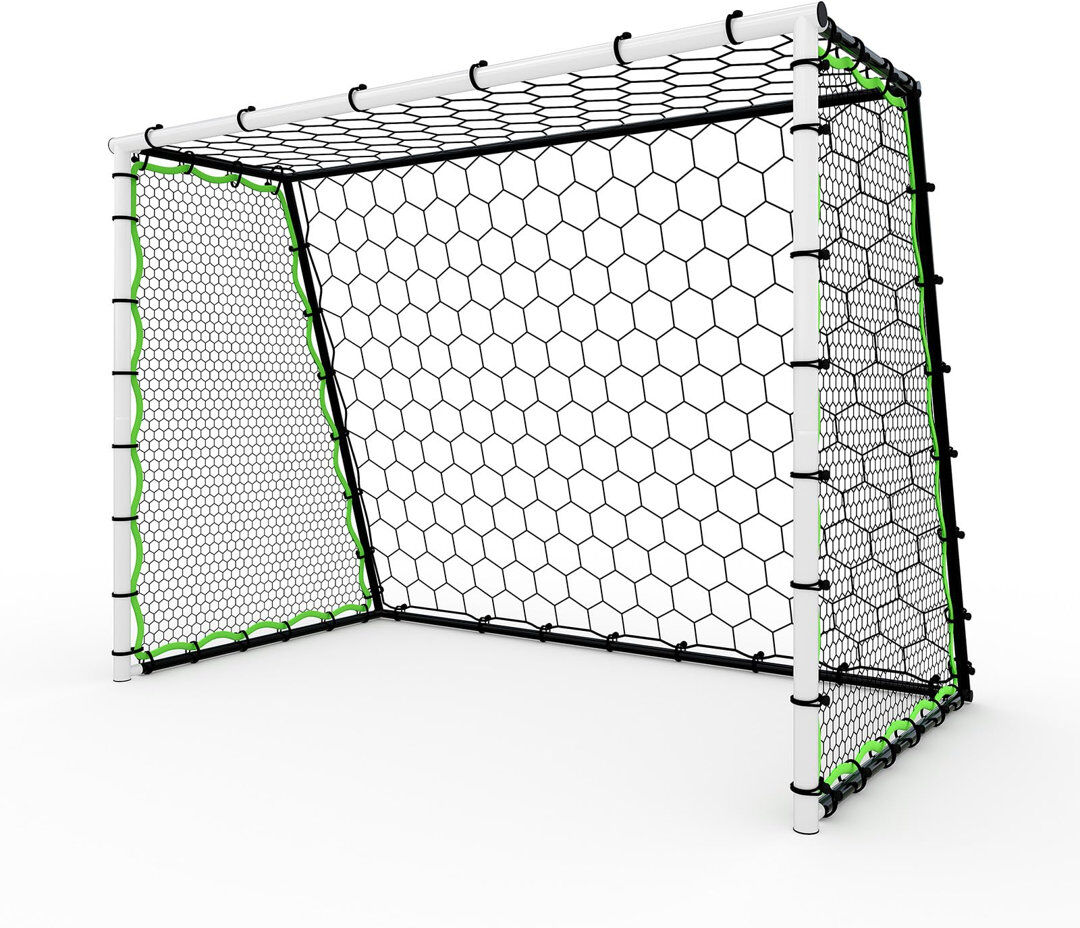
ZACOO 3-in-1 Soccer Rebounder Net 7x5ft, Large Football Goal Trainer with High, Low Shot Zones, Durable Steel Frame, for , Passing, Ball Control, Solo, TeamUpgrade your soccer training with this 3-in-1 Soccer Rebounder Net and Goal. Measuring 7x5ft, it features both high and low rebound zones to simulate real-game scenarios, boosting skills in , passing, and ball control. The sturdy steel construction ensures durability for powerful kicks and year-round use, while the quick-rebound net allows for non-stop, efficient practice. Whether you’re a beginner practicing at home or a seasoned player training with your team, this versatile trainer elevates every session. Stop chasing balls and start maximizing your performance—anytime, anywhere. ZACOO119,99 £*Shipping: 0,00 £Secure redirect to the provider



-
What is the reflection of polynomials?
The reflection of a polynomial is a transformation that flips the graph of the polynomial over a specified line, such as the x-axis or the y-axis. This transformation results in a mirror image of the original graph across the specified line. The reflection of a polynomial can be achieved by replacing x with -x in the polynomial function, which effectively reflects the graph across the y-axis. This transformation can help visualize the symmetry of the polynomial and its behavior across different axes. **
-
How does factoring third degree polynomials work?
Factoring third degree polynomials involves finding the roots of the polynomial, which are the values of x that make the polynomial equal to zero. Once the roots are found, the polynomial can be factored using the roots as factors. This process can be done using various methods such as the rational root theorem, synthetic division, or the factor theorem. By factoring the polynomial, we can express it as a product of linear and quadratic factors, making it easier to analyze and solve. **
-
Which polynomials have a value different from zero?
Polynomials with non-zero coefficients have values different from zero. A polynomial is a sum of terms, each of which is a constant multiplied by a variable raised to a non-negative integer power. If any of the coefficients in the polynomial are non-zero, then the polynomial will have a value different from zero for certain input values of the variable. **
-
How can one use complex numbers in polynomials?
Complex numbers can be used in polynomials as roots or solutions to the polynomial equation. For example, if a polynomial has complex roots, these can be used to factorize the polynomial into linear factors. Additionally, complex numbers can be used to solve higher degree polynomial equations using methods such as the Fundamental Theorem of Algebra and the Factor Theorem. Overall, complex numbers provide a way to extend the solutions of polynomial equations beyond just real numbers. **


How to create polynomials that have no real roots?
One way to create polynomials that have no real roots is to have all the roots be complex numbers. This can be achieved by using quadratic polynomials with a negative discriminant, resulting in complex conjugate roots. Another method is to have the polynomial be of odd degree, as odd-degree polynomials always have at least one real root. Additionally, by using higher degree polynomials with carefully chosen coefficients, it is possible to ensure that all roots are complex. **
What are Laguerre polynomials and what does ONB mean?
Laguerre polynomials are a set of orthogonal polynomials that arise in the study of special functions and mathematical physics. They are solutions to Laguerre's differential equation and are commonly used in problems involving exponential functions. ONB stands for orthogonal normalized basis. In the context of Laguerre polynomials, an ONB refers to a set of polynomials that are orthogonal to each other with respect to a specific inner product and are normalized to have unit length. This property allows them to form a basis for a vector space, making them useful for expressing functions in terms of a linear combination of these polynomials. **
Top-Angebote
Products related to Polynomials:
-
Haokelball 12x6ft Portable Soccer Goal with Agility Ladder & Cones – Quick Setup Backyard Soccer Net with Carry BagAbout this item ️ Robust Construction for Lasting Stability Built with sturdy support posts, flexible fiberglass poles, a reinforced steel base, and four ground stakes, this soccer goal delivers exceptional stability and durability for intense play111,05 $*Shipping: 0,00 $Secure redirect to the provider
-
Can polynomials be normalized?
Yes, polynomials can be normalized by dividing each term by the leading coefficient. This process ensures that the leading coefficient of the polynomial is equal to 1, making it easier to compare and analyze different polynomials. Normalizing polynomials can also help simplify calculations and make it easier to identify important characteristics of the polynomial, such as its degree and leading term. **
-
How do you calculate polynomials?
To calculate polynomials, you first need to identify the terms of the polynomial, which are the individual parts separated by addition or subtraction. Then, you combine like terms by adding or subtracting the coefficients of the same variables raised to the same powers. Finally, you simplify the expression by combining any remaining like terms. If there are any exponents, you can use the rules of exponents to simplify further. **
-
What is the reflection of polynomials?
The reflection of a polynomial is a transformation that flips the graph of the polynomial over a specified line, such as the x-axis or the y-axis. This transformation results in a mirror image of the original graph across the specified line. The reflection of a polynomial can be achieved by replacing x with -x in the polynomial function, which effectively reflects the graph across the y-axis. This transformation can help visualize the symmetry of the polynomial and its behavior across different axes. **
-
How does factoring third degree polynomials work?
Factoring third degree polynomials involves finding the roots of the polynomial, which are the values of x that make the polynomial equal to zero. Once the roots are found, the polynomial can be factored using the roots as factors. This process can be done using various methods such as the rational root theorem, synthetic division, or the factor theorem. By factoring the polynomial, we can express it as a product of linear and quadratic factors, making it easier to analyze and solve. **
Similar search terms for Polynomials
-
Haokelball Portable 12x6FT Soccer Goal Net Set – Carry Bag, Cones & Agility Ladder IncludedProduct Highlights Durable Frame Construction – Made of robust metal tubes and flexible fiber rods for structural integrity and impact cushioning Reinforced Net Material – Knotted anti-tear net extends product lifespan under regular use Enhanced…99,99 $*Shipping: 0,00 $Secure redirect to the provider
-
ZACOO 3-in-1 Soccer Rebounder Net 7x5ft, Large Football Goal Trainer with High, Low Shot Zones, Durable Steel Frame, for , Passing, Ball Control, Solo, TeamUpgrade your soccer training with this 3-in-1 Soccer Rebounder Net and Goal. Measuring 7x5ft, it features both high and low rebound zones to simulate real-game scenarios, boosting skills in , passing, and ball control. The sturdy steel construction ensures durability for powerful kicks and year-round use, while the quick-rebound net allows for non-stop, efficient practice. Whether you’re a beginner practicing at home or a seasoned player training with your team, this versatile trainer elevates every session. Stop chasing balls and start maximizing your performance—anytime, anywhere. ZACOO119,99 £*Shipping: 0,00 £Secure redirect to the provider
-
Costway 12 x 6 Feet Soccer Goal with Strong PVC Frame and High-Strength NettingThe soccer goal measures 12 x 4 x 6 ft (L x W x H) and only weighs 24.5 lbs, which is portable and lightweight for outdoor use, and you can install it anywhere you want.102,99 $*Shipping: 0,00 $Secure redirect to the provider
-
Which polynomials have a value different from zero?
Polynomials with non-zero coefficients have values different from zero. A polynomial is a sum of terms, each of which is a constant multiplied by a variable raised to a non-negative integer power. If any of the coefficients in the polynomial are non-zero, then the polynomial will have a value different from zero for certain input values of the variable. **
-
How can one use complex numbers in polynomials?
Complex numbers can be used in polynomials as roots or solutions to the polynomial equation. For example, if a polynomial has complex roots, these can be used to factorize the polynomial into linear factors. Additionally, complex numbers can be used to solve higher degree polynomial equations using methods such as the Fundamental Theorem of Algebra and the Factor Theorem. Overall, complex numbers provide a way to extend the solutions of polynomial equations beyond just real numbers. **
-
How to create polynomials that have no real roots?
One way to create polynomials that have no real roots is to have all the roots be complex numbers. This can be achieved by using quadratic polynomials with a negative discriminant, resulting in complex conjugate roots. Another method is to have the polynomial be of odd degree, as odd-degree polynomials always have at least one real root. Additionally, by using higher degree polynomials with carefully chosen coefficients, it is possible to ensure that all roots are complex. **
-
What are Laguerre polynomials and what does ONB mean?
Laguerre polynomials are a set of orthogonal polynomials that arise in the study of special functions and mathematical physics. They are solutions to Laguerre's differential equation and are commonly used in problems involving exponential functions. ONB stands for orthogonal normalized basis. In the context of Laguerre polynomials, an ONB refers to a set of polynomials that are orthogonal to each other with respect to a specific inner product and are normalized to have unit length. This property allows them to form a basis for a vector space, making them useful for expressing functions in terms of a linear combination of these polynomials. **
* All prices are inclusive of VAT and, if applicable, plus shipping costs. The offer information is based on the details provided by the respective shop and is updated through automated processes. Real-time updates do not occur, so deviations can occur in individual cases. ** Note: Parts of this content were created by AI.