Buy womensfootball.eu ?
We are moving the project
womensfootball.eu .
Are you interested in purchasing the domain
womensfootball.eu ?
domain@kv-gmbh.de · 0541-91531010
Buy womensfootball.eu ?
Why do constants disappear when differentiating?
Constants disappear when differentiating because the derivative of a constant is always zero. This is because a constant value does not change as the independent variable changes, so its rate of change is always zero. When taking the derivative of a function, the constant term does not affect the rate of change of the function, so it is essentially "ignored" in the differentiation process. **
Is integrating the opposite of differentiating?
No, integrating is not the opposite of differentiating. In mathematics, differentiation is the process of finding the derivative of a function, while integration is the process of finding the antiderivative of a function. These two processes are related, but they are not opposites. In fact, they are inverse operations of each other, meaning that integrating the derivative of a function will give you the original function. **


Similar search terms for Differentiating
Top-Angebote
Products related to Differentiating:
-
Haokelball 12x6ft Portable Soccer Goal with Agility Ladder & Cones – Quick Setup Backyard Soccer Net with Carry BagAbout this item ️ Robust Construction for Lasting Stability Built with sturdy support posts, flexible fiberglass poles, a reinforced steel base, and four ground stakes, this soccer goal delivers exceptional stability and durability for intense play111,05 $*Shipping: 0,00 $Secure redirect to the provider
-
Haokelball Portable 12x6FT Soccer Goal Net Set – Carry Bag, Cones & Agility Ladder IncludedProduct Highlights Durable Frame Construction – Made of robust metal tubes and flexible fiber rods for structural integrity and impact cushioning Reinforced Net Material – Knotted anti-tear net extends product lifespan under regular use Enhanced…99,99 $*Shipping: 0,00 $Secure redirect to the provider
-
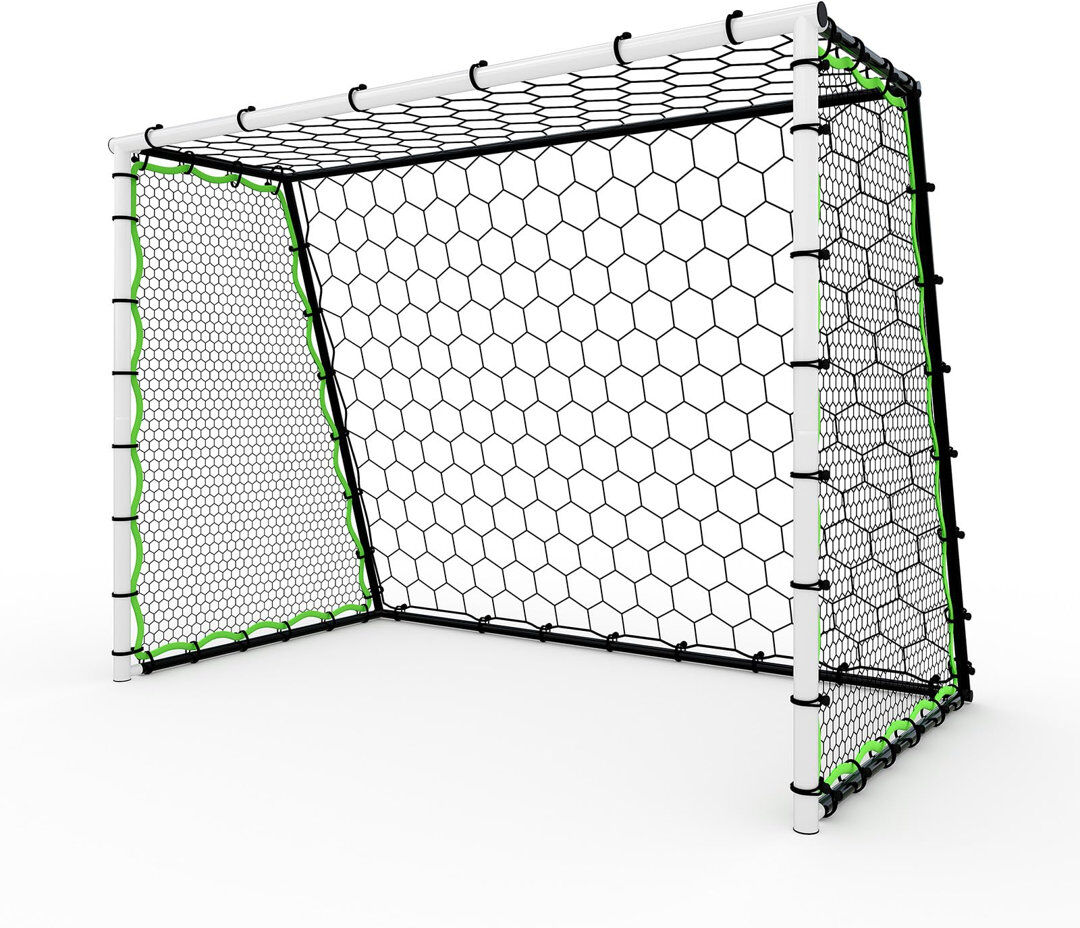
ZACOO 3-in-1 Soccer Rebounder Net 7x5ft, Large Football Goal Trainer with High, Low Shot Zones, Durable Steel Frame, for , Passing, Ball Control, Solo, TeamUpgrade your soccer training with this 3-in-1 Soccer Rebounder Net and Goal. Measuring 7x5ft, it features both high and low rebound zones to simulate real-game scenarios, boosting skills in , passing, and ball control. The sturdy steel construction ensures durability for powerful kicks and year-round use, while the quick-rebound net allows for non-stop, efficient practice. Whether you’re a beginner practicing at home or a seasoned player training with your team, this versatile trainer elevates every session. Stop chasing balls and start maximizing your performance—anytime, anywhere. ZACOO119,99 £*Shipping: 0,00 £Secure redirect to the provider



-
Why does the constant disappear when differentiating?
The constant disappears when differentiating because the derivative represents the rate of change of a function at a specific point, and the constant does not affect this rate of change. When taking the derivative of a function, the constant term does not contribute to the slope of the function and therefore does not affect the derivative. As a result, the constant term is essentially a vertical shift and does not impact the slope or rate of change of the function. **
-
Why does the constant term disappear when differentiating?
The constant term disappears when differentiating because the derivative measures the rate of change of a function at a specific point. Since a constant term does not change as the input variable changes, its rate of change is zero. Therefore, when differentiating, the constant term does not contribute to the slope of the function and is thus eliminated from the derivative. **
-
What is the product rule for differentiating the exponential function?
The product rule for differentiating the exponential function states that if you have two functions, f(x) and g(x), and you want to find the derivative of their product, (f(x) * g(x)), you can do so by taking the derivative of the first function (f'(x)) multiplied by the second function (g(x)), plus the first function (f(x)) multiplied by the derivative of the second function (g'(x)). In the case of the exponential function, if you have two exponential functions, such as e^x and e^2x, their derivative would be e^x * 2e^2x + e^x * 2e^2x. **
-
Why can't exponents with the same base be added when differentiating?
Exponents with the same base cannot be added when differentiating because the rules of differentiation do not allow for the addition of exponents. When differentiating a function with exponents, the power rule states that the exponent is brought down and multiplied by the coefficient, but the exponents themselves are not added together. This is because the process of differentiation involves finding the rate of change of a function with respect to its variable, and adding exponents with the same base does not accurately represent this rate of change. Therefore, exponents with the same base cannot be added when differentiating. **


Why is it that when differentiating a polynomial function, one degree is always lost?
When differentiating a polynomial function, one degree is always lost because the power rule of differentiation states that when you differentiate a term with a variable raised to a power, you decrease the power by 1. Since the degree of a polynomial is determined by the highest power of the variable, each term in the polynomial will decrease in degree by 1 when differentiated. This results in the loss of one degree overall when differentiating the entire polynomial function. **
How can one use polynomial division to find f''(x) and f'(3x) when differentiating?
One can use polynomial division to find f''(x) by first finding f'(x) using polynomial division, and then differentiating f'(x) to find f''(x). To find f'(3x), one can first substitute 3x into the polynomial function to get a new polynomial in terms of x, and then use polynomial division to find the derivative of this new polynomial with respect to x. **
Top-Angebote
Products related to Differentiating:
-
Haokelball 12x6ft Portable Soccer Goal with Agility Ladder & Cones – Quick Setup Backyard Soccer Net with Carry BagAbout this item ️ Robust Construction for Lasting Stability Built with sturdy support posts, flexible fiberglass poles, a reinforced steel base, and four ground stakes, this soccer goal delivers exceptional stability and durability for intense play111,05 $*Shipping: 0,00 $Secure redirect to the provider
-
Why do constants disappear when differentiating?
Constants disappear when differentiating because the derivative of a constant is always zero. This is because a constant value does not change as the independent variable changes, so its rate of change is always zero. When taking the derivative of a function, the constant term does not affect the rate of change of the function, so it is essentially "ignored" in the differentiation process. **
-
Is integrating the opposite of differentiating?
No, integrating is not the opposite of differentiating. In mathematics, differentiation is the process of finding the derivative of a function, while integration is the process of finding the antiderivative of a function. These two processes are related, but they are not opposites. In fact, they are inverse operations of each other, meaning that integrating the derivative of a function will give you the original function. **
-
Why does the constant disappear when differentiating?
The constant disappears when differentiating because the derivative represents the rate of change of a function at a specific point, and the constant does not affect this rate of change. When taking the derivative of a function, the constant term does not contribute to the slope of the function and therefore does not affect the derivative. As a result, the constant term is essentially a vertical shift and does not impact the slope or rate of change of the function. **
-
Why does the constant term disappear when differentiating?
The constant term disappears when differentiating because the derivative measures the rate of change of a function at a specific point. Since a constant term does not change as the input variable changes, its rate of change is zero. Therefore, when differentiating, the constant term does not contribute to the slope of the function and is thus eliminated from the derivative. **
Similar search terms for Differentiating
-
Haokelball Portable 12x6FT Soccer Goal Net Set – Carry Bag, Cones & Agility Ladder IncludedProduct Highlights Durable Frame Construction – Made of robust metal tubes and flexible fiber rods for structural integrity and impact cushioning Reinforced Net Material – Knotted anti-tear net extends product lifespan under regular use Enhanced…99,99 $*Shipping: 0,00 $Secure redirect to the provider
-
ZACOO 3-in-1 Soccer Rebounder Net 7x5ft, Large Football Goal Trainer with High, Low Shot Zones, Durable Steel Frame, for , Passing, Ball Control, Solo, TeamUpgrade your soccer training with this 3-in-1 Soccer Rebounder Net and Goal. Measuring 7x5ft, it features both high and low rebound zones to simulate real-game scenarios, boosting skills in , passing, and ball control. The sturdy steel construction ensures durability for powerful kicks and year-round use, while the quick-rebound net allows for non-stop, efficient practice. Whether you’re a beginner practicing at home or a seasoned player training with your team, this versatile trainer elevates every session. Stop chasing balls and start maximizing your performance—anytime, anywhere. ZACOO119,99 £*Shipping: 0,00 £Secure redirect to the provider
-
Costway 12 x 6 Feet Soccer Goal with Strong PVC Frame and High-Strength NettingThe soccer goal measures 12 x 4 x 6 ft (L x W x H) and only weighs 24.5 lbs, which is portable and lightweight for outdoor use, and you can install it anywhere you want.102,99 $*Shipping: 0,00 $Secure redirect to the provider
-
What is the product rule for differentiating the exponential function?
The product rule for differentiating the exponential function states that if you have two functions, f(x) and g(x), and you want to find the derivative of their product, (f(x) * g(x)), you can do so by taking the derivative of the first function (f'(x)) multiplied by the second function (g(x)), plus the first function (f(x)) multiplied by the derivative of the second function (g'(x)). In the case of the exponential function, if you have two exponential functions, such as e^x and e^2x, their derivative would be e^x * 2e^2x + e^x * 2e^2x. **
-
Why can't exponents with the same base be added when differentiating?
Exponents with the same base cannot be added when differentiating because the rules of differentiation do not allow for the addition of exponents. When differentiating a function with exponents, the power rule states that the exponent is brought down and multiplied by the coefficient, but the exponents themselves are not added together. This is because the process of differentiation involves finding the rate of change of a function with respect to its variable, and adding exponents with the same base does not accurately represent this rate of change. Therefore, exponents with the same base cannot be added when differentiating. **
-
Why is it that when differentiating a polynomial function, one degree is always lost?
When differentiating a polynomial function, one degree is always lost because the power rule of differentiation states that when you differentiate a term with a variable raised to a power, you decrease the power by 1. Since the degree of a polynomial is determined by the highest power of the variable, each term in the polynomial will decrease in degree by 1 when differentiated. This results in the loss of one degree overall when differentiating the entire polynomial function. **
-
How can one use polynomial division to find f''(x) and f'(3x) when differentiating?
One can use polynomial division to find f''(x) by first finding f'(x) using polynomial division, and then differentiating f'(x) to find f''(x). To find f'(3x), one can first substitute 3x into the polynomial function to get a new polynomial in terms of x, and then use polynomial division to find the derivative of this new polynomial with respect to x. **
* All prices are inclusive of VAT and, if applicable, plus shipping costs. The offer information is based on the details provided by the respective shop and is updated through automated processes. Real-time updates do not occur, so deviations can occur in individual cases. ** Note: Parts of this content were created by AI.